


Flu Shots: When and Where to Get Vaccinated in Harrisburg

Tis the season everyone dreads — flu season. If you’re living or spending time in Harrisburg, Hamilton Health is here to help you find the best place to protect yourself and everyone around you without taking time away from your busy schedule.
What Are the Benefits of a Flu Shot?
As with all vaccines, the purpose of a flu shot is to inoculate your body against the newest flu strains. When you get a flu shot, your body learns how to make the antibodies to fight the infection, ensuring it’s prepared for future “doses” or exposures. Without vaccination, the flu can wreak havoc on your body — unvaccinated people are more likely to deal with severe and potentially fatal complications.
Getting the flu shot also protects everyone around you, as you’re less likely to transmit it. This benefit is especially important if you spend a lot of time around children, older adults and people with compromised immune systems.
When to Get the Flu Shot
The best time to get your flu shot is in early fall. In the United States, flu season runs from October through March or April, with peak infection months being December, January and February.
The flu shot lasts approximately six months and takes about two weeks to become fully effective, so to stay protected through the worst of the season, late September and early October are the best times to get it. Still, getting your flu shot at any time, whether it’s August or March, will help protect your immune system and can still prevent you from coming down sick.
Flu Shots Near You in Harrisburg
Looking for a flu shot in Harrisburg or anywhere else in the country? Great news — there are plenty of options, and you can find them all on one convenient website. The CDC established Vaccines.gov so people nationwide could search for vaccine providers in their zip code. This site also provides information about which locations offer other vaccines, such as those for RSV and Covid-19.
You can also contact your doctor or visit your local pharmacy to see if they offer flu vaccinations on-site. Many of them can guide you in the right direction even if their facility does not provide the vaccine you’re looking for.
Contact Hamilton Health for Flu Treatment
Hamilton Health is proud to be an accessible provider for everyone in Harrisburg and the surrounding areas, delivering flu care and treatment to low-income families, single parents and other communities in need. If you’re seeking a flu shot or treatment for your flu, contact us today and let us help.
Practical Tips on How to Avoid the Winter Cold and Flu

Winter brings shorter days, colder temperatures and a rise in seasonal illnesses. Many families want to know how to avoid the winter cold and flu, especially when viruses spread easily at school, work and in crowded indoor settings. As Your Home for Health, Hamilton Health Center provides patient-centered guidance to help you protect yourself and your loved ones.
Why Winter Illness Spreads More Easily
Cold, dry air can weaken the body’s natural defenses, making it easier for viruses to travel and settle in the nose and throat. Spending more time indoors also increases close contact with others. Understanding these factors helps you make choices that reduce your risk of getting sick in the winter.
Ways to Avoid Getting Sick This Winter
Learn how to avoid the flu and other illnesses this winter:
1. Stay Up to Date on Your Flu Shot
The best time to get a flu shot is early fall. However, you can still get vaccinated later in the year and be protected. The flu shot lowers your chances of becoming seriously ill and reduces the spread of the virus in your household and community.
Hamilton Health Center offers flu shots for adults and children, including patients with Medicaid, Medicare, private insurance or no insurance. Vaccines are available in a multicultural, multilingual setting, so every patient receives clear, comfortable care.
2. Strengthen Everyday Prevention Habits
Many people want to know how to avoid catching the flu or getting sick in the winter. Simple, consistent habits make a measurable difference:
- Wash your hands for at least 20 seconds.
- Don’t touch your face with unwashed hands.
- Clean frequently touched surfaces, like doorknobs, phones and keyboards.
- Wear a mask when you’re sick or in crowded indoor spaces.
- Give yourself space from people who are coughing or sneezing.
3. Support Your Immune System
Healthy daily routines help your body respond to viruses more effectively:
- Get seven to nine hours of sleep.
- Stay hydrated.
- Eat balanced meals with fruits, vegetables and whole grains.
- Manage stress through light movement, breathing exercises or talking with someone you trust.
Hamilton Health Center — through medical care, behavioral health support, WIC nutrition services and community education — helps families build habits that support year-round health.
4. Recognize Early Symptoms
Early detection helps prevent severe illness and limits spread. Watch for:
- Fever or chills
- Cough
- Sore throat
- Fatigue
- Muscle aches
- Headache
If symptoms begin, stay home, rest, hydrate and contact your provider. Prompt care is especially important for young children, older adults, pregnant individuals and people with chronic conditions.
Schedule an Appointment Today
Stay healthy this winter with support from Hamilton Health Center. Find a location near you and make an appointment today. We’re here for you at every step!
Are Sinus Infections Contagious?

‘Tis the season…for colds, the flu and sinus infections! A sinus infection results in painful inflammation of your sinus tissues, and it can have similar symptoms as a cold, including congestion, post-nasal drip and headaches.
As with most illnesses, if you’re sick, the best thing to do is stay home and rest until you’ve recovered. However, if you have a big event coming up or simply don’t want to deal with taking time off, you’re probably wondering whether you can get away with powering through without infecting anyone else.
Are Bacterial Sinus Infections Contagious?
Unfortunately, the answer is — it depends. Sinus infections can be viral or bacterial, and those particles are contagious. However, sinus infections can also be triggered by allergens. In this case, you are at no risk of spreading your condition.
It should be noted that technically, even if you are contagious, you are not spreading the infection itself. Instead, you are passing on the virus or bacteria that caused the infection. So, even if your symptoms don’t line up, you may pass on a cold or the flu without meaning to.
How Long Are Sinus Infections Contagious?
If your sinus infection is bacterial or viral, you can expect that you are contagious and will be until your symptoms dissipate. Recovery takes a few days in most cases, but it can also take up to a week before you start feeling better. These infections usually go away on their own, but if your symptoms persist for over a week, you may need to visit a health professional and get antibiotics to help you heal.
Are Sinus Infections Contagious After Antibiotics?
The good news is that if you end up needing antibiotics, you will not be able to transmit the cause of your infection to anyone else, even if you are still symptomatic. It may take a day or two for the antibiotic to become effective depending on which type you’re prescribed, but after that, you will be free to go back to your daily routine as soon as you are up for it.
Get a Same-Day Appointment at Hamilton Health
When you’re feeling ill, get treatment as soon as possible through Hamilton Health. We regularly have same-day appointments available, and our empathetic staff is ready and willing to find a way to ease your symptoms. Whether you fall victim to flu season or your sinus infection won’t go away, contact us today and get back to your life sooner and healthier.
How to Tell if Your Sinus Infection Is Bacterial or a Virus
A sinus infection, also called sinusitis, is one of the most common reasons people visit a doctor. It occurs when your sinuses, or the cavities around your nose and eyes, become inflamed and swollen, typically due to a viral or bacterial infection. When sinuses swell, they prevent mucus from draining. This often causes facial pressure and discomfort.
It’s important to determine whether a bacteria or virus is causing your sinus infection so you can treat it effectively and feel better sooner. At Hamilton Health Center, our compassionate health care providers are ready to help. Call us today at (717) 232-9971 to schedule an appointment.
Are Sinus Infections Viral or Bacterial?
Sinus infections are usually caused by the same viruses that lead to the common cold. For example, if you have an upper respiratory infection, the virus causing your cold might also enter your sinuses. Once the germ is in your sinuses, it can breed and lead to inflammation and uncomfortable symptoms.
Bacterial infections and allergies can also cause sinus inflammation.
How Can You Tell if Your Sinus Infection Is Bacterial or Viral?
Doctors mainly consider how long you’ve had the infection to determine whether it’s viral or bacterial. Sinus infection symptoms caused by a virus usually start improving after five days.
Bacteria sinus infections typically last more than 10 days without symptom improvement. Also, if your symptoms improve after a few days but then get worse, you might have a bacterial infection.
What Is the Treatment for a Sinus Infection Caused by a Virus?
Treatment for a viral sinus infection usually involves self-care and relieving symptoms until the infection gets better on its own. This may include taking over-the-counter pain relievers to ease a headache or facial pain.
Other at-home remedies include drinking plenty of fluids, rinsing your nasal passages with a saline solution or taking a decongestant.
What Is the Treatment for a Bacterial Sinus Infection?
Like a viral infection, bacterial sinusitis might clear up on its own. However, if your symptoms are severe, have worsened over a few days, or persist beyond 10 days, we recommend consulting a doctor. A doctor may prescribe an antibiotic to fight the bacteria causing the infection.
Schedule Your Appointment With Hamilton Health Center
If you’re concerned about your or your child’s sinus infection symptoms, we’re here for you at Hamilton Health Center. We offer affordable, patient-centered medical services to adults and children in Harrisburg, Pennsylvania, and surrounding areas. Call us today at (717) 232-9971 to schedule your appointment.

Baby Food Tips
Correctly storing and heating your baby’s food promotes safe feeding and can save on costs. Here are some essential tips about baby food and how you and your baby can enjoy feeding time together.
How Long Can Baby Food Stay in the Fridge?
You can store baby food containing fruits and vegetables in the fridge for up to two days and refrigerate food containing meat or poultry for up to one day. Baby food contains essential building blocks necessary for your baby’s health. You can help preserve vitamins and minerals by serving their food fresh and handling it correctly.
Knowing how to reheat baby food is important for food safety. You can reheat baby food in a pan or the microwave until it’s steaming hot to kill off any bacteria. Don’t let the food cool down too long, as bacteria start growing within two hours.
How Many Baby Food Pouches a Day Are Appropriate?
The number of baby food pouches you give your baby a day depends on their contents. Stick to a maximum of two pouches a day, and always read the labels before buying them.
When choosing baby food pouches, quality over quantity is always best, as some offer more health benefits than others. Feeding your baby with pouches high in fiber and low in sugar is ideal.
How Long Is Homemade Baby Food Good For?
Homemade baby food can stay fresh for up to two days in the fridge and one month if you freeze it. Reheat the food in a new container every time. Homemade baby food is a great alternative to store-bought varieties, and you can save money by keeping it simple.
It’s best to prepare your baby’s food daily or every other day. Store it in a clean container covered with a tight lid. Avoid feeding your baby out of the storage container, as saliva and other bacteria can contaminate the food.
Contact Hamilton Health for the Pediatric Support You Need
Navigating the choices you have when feeding your baby can be overwhelming, as you want to give your little one the best. Having a solid support structure to assist you can significantly relieve the burden.
Hamilton Health is a Federally Qualified Health Center (FQHC). We have a Women, Infants and Children (WIC) Program for those on Medicaid or who cannot afford private care. You can also have a look at our pediatric services and call us at (717) 232-9971 or contact us through our other channels today.
What Are the Most Common STDs?

Knowledge is power when it comes to your health, especially your sexual health. One of the best ways to keep yourself and your partner healthy is to understand the signs and symptoms of STDs or STIs. Hamilton Health Center offers STD testing on a walk-in basis to help members of the Harrisburg community stay safe and healthy.
What Are the Most Common STDs in Women?
Some of the more common STDs for women are:
- Human papillomavirus (HPV)
- Gonorrhea
- Chlamydia
- Genital herpes
If you experience the following symptoms, it is wise to undergo testing for one of the STIs above:
- Pain or burning during urination
- Changes in the look or consistency of vaginal discharge
- Itching in the vaginal area
- Pain during sex
- Abnormal bleeding
- Rashes or sores
What Are the Most Common STDs in Men?
While men can experience a wide range of STDs, some more common diagnoses include:
- Hepatitis A
- Hepatitis B
- Herpes
- Syphilis
If you experience the following symptoms, it is wise to undergo testing for one of the STDs above as soon as possible:
- Diarrhea
- Fever
- Joint and muscle pain
- Loss of appetite
- Itching, burning or tingling sensation
- Blisters or warts on the genital areas or mouth
What Age Are STDs Most Common?
Anyone who has unprotected sex can get an STD regardless of their age. While most cases are in men and women under 25, there has been a rise in infections in people over 65. Part of this increase in the older population is that older adults often underestimate their risk and do not take proper precautions.
STDs are also easier to miss in older adults as many symptoms mimic other common health issues. Depending on the STI, the individual may present no symptoms at all. Regardless of your age, it is essential to undergo screening for STIs before engaging in sexual activity and to keep your health care provider informed about any new partners or symptoms you are experiencing.
When Can I Get an STD Test?
Most STDs do not have noticeable symptoms, which makes testing essential to determine if you have an STD. Every STD has a different incubation and window period, which is the time between exposure and when a test can accurately detect the organism. If you know you were exposed to an STI, you will want to consult your doctor about when to undergo testing to ensure you have the most accurate results.
If you are unsure whether you were exposed to an STD and would still like to undergo testing, you can consult with your doctor about an accurate testing timeline.
Keep Yourself and Your Partner Safe With STD Testing From Hamilton Health Center
Give yourself and your partner the gift of peace of mind when you schedule STI Testing at Hamilton Health Center. Our adult STI clinic is a safe and judgment-free zone operated by knowledgeable providers who are happy to answer any questions. We also provide risk reduction tools like condoms at no cost to help you stay safe in future sexual encounters. Visit our clinic or call 717-232-9971 to learn more today.
Whooping Cough Symptoms and Facts

Whooping cough is a highly contagious infection in the respiratory tract. Most cases of whooping cough are easily identifiable through an intense cough and a whooping sound that occurs as the person takes a breath. While most people received the whooping cough vaccine when they were infants, the infection has found its way back into many communities. Knowing whooping cough facts and symptoms to look for can help you effectively protect yourself from becoming sick.
How to Tell if Your Kid Has Whooping Cough
Symptoms of whooping cough in children can vary depending on the child. For infants, the symptoms may appear as a pause in the breath, while babies may have a very quiet cough. In children, whooping cough symptoms may take three different stages.
The first stage can last up to two weeks and includes symptoms such as a runny nose and low fever. In the second stage, the child may experience a dry cough or the characteristic whooping noise for up to 10 weeks. In the third stage, the child might see a decrease in coughing, but it can continue to bother them for up to two months.
Whooping Cough Symptoms
Many call whooping cough the “100-day cough” since it lasts over three months. After becoming infected with whooping cough, the symptoms can take 10 days or longer to appear. The full list of symptoms includes:
- Running nose
- Congestion
- Cough
- Watery eyes
- Vomiting
- The face turns red or blue after coughing
- Extreme fatigue
- A high-pitched whoop sound during the next intake of breath
In some cases, the individual will only have a persistent hacking cough.
How Contagious Is Whooping Cough?
Whooping cough is highly contagious and spreads through coughing and sneezing. Even if the individual has mild symptoms, they can spread the bacteria to others.
What’s the Recovery Time for Whooping Cough?
Whooping cough recovery time can take two to three months. However, when you reach the third and final stage of the illness, your immune system is weak, which may cause you to become more susceptible to other diseases. If you contract another illness, it can extend your recovery time.
Tips for Whooping Cough Prevention
Receiving the whooping cough vaccine is the best method for prevention. Since the vaccine’s effectiveness fades over time, it’s best to make an appointment with your doctor if you were in close contact with someone with whooping cough.
Protect Yourself From Whooping Cough With Hamilton Health Center
Whooping cough is a severe disease that is easily preventable with help from Hamilton Health Center. Schedule an appointment to receive a whooping cough vaccine for yourself or your child today.
Prenatal Care
Prenatal care is essential to prepare for the birth of your child. There is a lot to keep track of during pregnancy to protect mothers and babies, which can confuse new parents. Prenatal care helps simplify the process by providing you with guidance throughout the entirety of your pregnancy.
Below, you’ll learn more about the importance of prenatal care, what to expect from your visits and prenatal advice to help improve the health of yourself and your baby throughout your pregnancy.
What Is Prenatal Care?
Prenatal care refers to getting routine checkups from nurses, doctors or midwives throughout pregnancy. Prenatal care is important for your baby’s health and your well-being as a mother. Care can start during pre-pregnancy planning, but if this isn’t possible, it’s best to start prenatal care as soon as you know you’re pregnant.
During your prenatal visits, your doctor, nurse or midwife will observe your baby’s development while focusing on improving your health and well-being, which influences your baby’s health. You should speak with your doctor about prenatal care as soon as you become pregnant.
Prenatal Care vs. Perinatal Care
Prenatal care refers to the regular checkups women undergo while pregnant. Perinatal care refers to the health care women receive during and directly after the birth of their child. Many women who receive perinatal care have high-risk pregnancies, or the mother or child has a severe medical condition. Perinatal care can include:
- Screening tests for congenital disabilities and diagnosis
- Care for congenital disabilities, such as congenital heart disease, bladder outlet obstructions and pleural effusion or fluid in the lungs
- Post-birth surgeries due to perinatal conditions in newborns
- Care for heart defects
- Support and guidance for the transition home after the birth
Many reasons exist that a child or mother might need perinatal care during or after birth. Prenatal care can help reduce the risk of complications during childbirth, so it’s always best to consult your doctor as soon as you become pregnant.
Benefits of Prenatal Care
Prenatal care helps improve the health of the mother and fetus, increasing the chance of a successful birth and a healthy child. There are many benefits of prenatal care, including the following:
- Reducing pregnancy complication risks: Prenatal care can help reduce complications by providing prenatal care guidelines to keep you in good health. Some of these guidelines or instructions include participating in moderate exercise, controlling preexisting conditions, eating a good diet and avoiding using or being around harmful substances, such as drugs and alcohol.
- Reducing fetus and infant complications: Using substances during pregnancy can significantly increase the risk of health defects in fetuses and newborns. Substances like tobacco, alcohol and drugs can cause numerous complications, such as physical abnormalities, cardiovascular issues and mental health issues. Prenatal care will help you learn how to stay away from substances while pregnant and monitor the health of your fetus during each trimester.
- Ensuring adequate vitamins and nutrients for the mother and child: Prenatal vitamins are essential for the health of the mother and child. During your prenatal visits, a medical professional will be able to give you recommendations on what vitamins to take during your pregnancy to ensure your and your baby’s health. Folic acid is a popular ingredient in prenatal vitamins because it can help reduce the risk of various defects by more than 70%.
- Ensuring medications are safe during pregnancy: Some medicines aren’t safe to take while pregnant and can increase the risks of adverse health effects for the fetus and child. During your prenatal visit, your doctor will ask what medications you’re taking and determine which are safe to use while providing alternatives for those that aren’t.
Different Types of Prenatal Care
Prenatal care includes more than just a couple of ultrasounds and a few doctor’s visits. You’ll go through different tests and exams to measure your and your baby’s health. Some of the different types of care you can expect during your visits include:
- Testing: Your doctor will perform the necessary testing to check your and your baby’s health. Some of these include tests for blood, infection, anemia, diabetes and other things that could affect the mother or fetus’ health. You’ll also receive screening tests to look for possible conditions your baby may have, such as Down syndrome, cystic fibrosis or gestational diabetes.
- Checkups: Regular checkups are an essential part of prenatal care. These checkups will monitor your baby’s growth and your overall health and well-being. You’ll likely have an ultrasound during your checkups, and you may undergo additional testing to check different things, such as your hormone levels.
- Activity monitoring: Once you reach a particular stage of your pregnancy, your doctor will monitor your baby’s activity, looking for regular movement or irregularities that require your doctor’s care. Counting your baby’s movement at home and reporting the movement to your doctor can help you assess your baby’s activity better. Call your doctor immediately if you don’t feel any activity at all once you’ve reached 28 weeks.
You may undergo additional testing based on age, medical history, test results and ethnic background. Talk with your doctor about the tests you may experience during prenatal visits.
What to Expect at Your Prenatal Care Visit
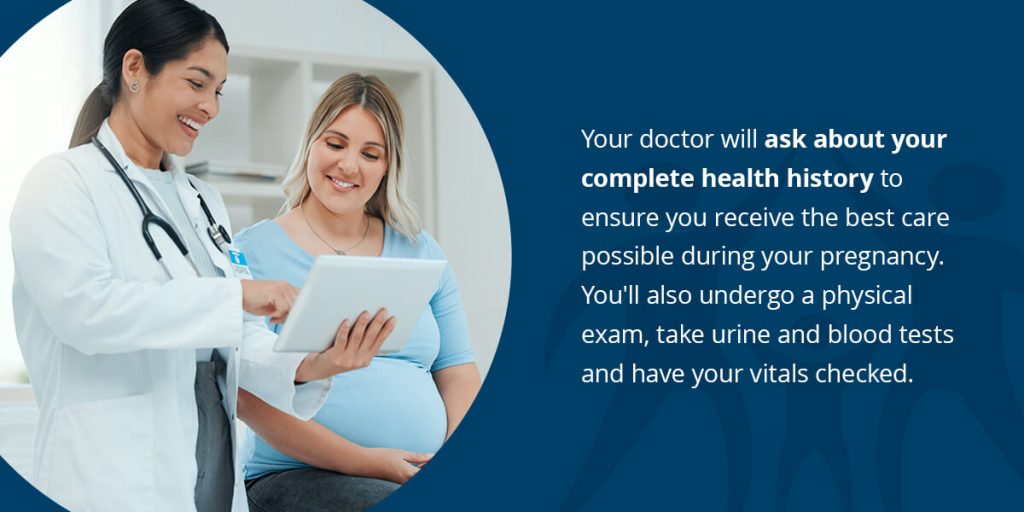
During your first visit, your doctor will ask about any previous pregnancies, operations or diseases. Your doctor will ask about your complete health history to ensure you receive the best care possible during your pregnancy. You’ll also undergo a physical exam, take urine and blood tests and have your vitals checked. You might also receive other tests, such as a cervical exam, mammogram or pap smear.
As your pregnancy develops, you’ll go in for additional visits to check your vitals, your baby’s growth and your baby’s heartbeat and activity. Your doctor will check for potential complications or conditions, such as preeclampsia, anemia or gestational diabetes. The prenatal care timeline for pregnant women looks like this:
- Starting prenatal care between eight and 12 weeks of pregnancy
- Attending prenatal care appointments every four to six weeks during the first and second trimesters
- Checking in with your doctor or midwife every two to three weeks once you reach 28 weeks and until 36 weeks
- Going to your doctor or midwife between 36 and 40 weeks for a pelvic exam and weekly visits
After these appointments, you’ll give birth and switch from prenatal care to neonatal care.
How to Choose the Right OB-GYN
When looking for an OB-GYN and prenatal care options in PA, you want to ensure that they offer the right services to ensure your and your baby’s health throughout your pregnancy. Look for the following prenatal care services from your OB-GYN:
- Pregnancy testing
- Overall health assessments through the duration of your pregnancy
- Delivery assistance
- Postpartum care
- Breastfeeding counseling
- Nutrition education
You should choose an OB-GYN that can monitor your and your baby’s health effectively throughout your pregnancy, testing for abnormalities and providing preventative care. You can ensure you pick the right OB-GYN by looking for an experienced clinic, doctor or midwife in your area.
You can also check reviews once you’ve found a few options, looking for the best reviews from other mothers and expecting families. If you have friends or family who recently gave birth, you can always ask them for referrals if they had a good experience with their OB-GYN.
Want to learn more about the importance of visiting an OB/GYN?

Trust Hamilton Health Center as Your OB-GYN
Pregnancy is an exciting time for many women and their families. However, it can also be stressful without the proper guidance. At Hamilton Health Center, we offer prenatal care services to ensure that you and your baby are taken care of during pregnancy. Our team aims to provide you with high-quality care and comprehensive services in one place, reducing the need to visit multiple offices or clinics during your pregnancy.
We provide regular testing and exams through each trimester of your pregnancy and educational resources to help you prepare. We can help you make decisions about your care in confidence. Learn how we can make a difference in your pregnancy care, and contact us today to get started!
More Resources for Women
Co-Sleeping and Bed-Sharing Safety Guidelines
Bringing your new baby home from the hospital is one of the most incredible feelings any new parent will ever experience. You hold this tiny body in your arms and realize that their safety, well-being and survival depend on you. As a mother, you have never left your child alone as you carried them for the last nine months, so how will you put your baby to sleep in a crib? They have never been away from you.
Co-sleeping — or sleeping in proximity to your baby, often in the same room — and bed-sharing are decisions that more and more families are opting for with new babies and even toddlers. This can be mutually beneficial for both mother and baby but needs to be done according to safety guidelines.

What Are the Advantages of Co-Sleeping and Bed-Sharing?
Being a new parent or even a parent for a second or third time, it is quite easy to forget just how little sleep you get with a new baby at home. Co-sleeping and bed-sharing can help parents get more restful sleep at night. Babies sleeping with the smell and touch of their parents tend to get more sleep, too! Here are a few more advantages of co-sleeping:
- Breastfeeding is easier during the night when the baby is nearby.
- Sudden infant death syndrome (SIDS) risks are reduced by up to 50% by sleeping in the same room.
- There is no nighttime separation.
- There are fewer bedtime hassles.
- You can keep your baby close all night and wake up to your smiling baby.

Safety Guide to Co-Sleeping and Bed-Sharing
When considering co-sleeping or bed-sharing, it is important to follow a few safety guidelines to prevent unintentional injury to your baby and other incidents. Co-sleeping or room-sharing is considered safer than bed-sharing, so keep that in mind as you make your decision. There are still co-sleeping safety tips you can follow to ensure you can sleep with peace of mind.
Consider Your Sleep Space
Considering your bed size and mattress is important as you want to ensure that there is enough room for everyone to sleep comfortably. Consider your partner and how you usually sleep, as this will help determine a space big enough for all of you.
If you’ll be sharing a room instead of a bed, which the American Academy of Pediatrics (AAP) recommends, evaluate your room’s layout. Where will there be space for the crib or bassinet? Will you need to move furniture to ensure a clear path between your bed and your baby’s?
Clear Your Bed
Make sure you remove unnecessary blankets and pillows from your bed that could become a danger while you and your baby are asleep. Remove scatter cushions or any other decorative linens that could cause a safety issue. Ensure your sheets are tight-fitting and your baby cannot become tangled in them. Keep the covers off your baby’s head and ensure your bed is not too soft, such as a waterbed.
Make a Safe Space for Your Baby
Make sure your bed is safe for your baby to sleep on if you choose bed-sharing. Clear any unnecessary blankets, pillows and stuffed animals. Using bedrails can also be beneficial to ensure your baby does not roll off of the bed as they get bigger. If your bed is against a wall or piece of furniture, make sure there is no space between the bed and wall before bedtime.
Again, sharing a space rather than a bed is recommended, and you should check that your child’s crib meets safety requirements. Use a firm mattress that fits well in the crib. Avoid adding any blankets, pillows or stuffed animals into your baby’s crib.
Keep Your Baby Lightly Dressed
Keep your baby lightly dressed and avoid swaddling the baby. Avoid big jackets, fluffy blankets and anything else that could be pulled over your baby’s head in their sleep. Keep them lightly dressed and focus on warming the room as opposed to dressing your baby too warm in a cold room.
Avoid Alcohol or Drugs
It is very important that you are not under the influence of drugs or alcohol when you get into bed with your baby, as a lighter sleep is preferred when bed-sharing to avoid the risk of suffocation. If you have taken sedative medication or are suffering from sleep deprivation, it is also advised against bed-sharing during this time as it will be difficult for you to wake.
Sleep Facing Your Baby
Facing your baby can let you monitor them continuously throughout the night. This will also make breastfeeding throughout the night much easier for mom and baby. Even if your baby is sleeping in a separate crib, facing them throughout the night can give you peace of mind.
Childproof Your Bedroom
While guidelines suggest room-sharing up to age 1, you may choose to share a room longer with your toddler. As your child gets older and is able to get off of the bed and move around, make sure your bedroom is childproofed. Anchor furniture to the walls, and avoid having anything in your bedroom that toddlers can climb on or pull on. You should also protect outlets and keep cables and wires out of sight.
Keep Your Pets off of the Bed
Many children suffer from allergies, and having your fur babies on the bed could become a health risk to the baby. Keeping your pets off of your bed is important as you want to create a clean and dust-free environment for your baby to sleep in.
If your pets won’t sleep in their own beds and continue to sleep in your bed, it is better to find an alternative place for your baby to sleep and consider room-sharing.
Avoid Strong Scents
Strong scents in lotions, fabric softeners and air fresheners can affect your baby’s sensitive senses. This is best to avoid around the house while your baby is small and especially in bed.
Avoid Your Older Children Sleeping Next to a Baby
Anyone that has slept with a toddler or elder child can easily agree that they sleep as if they need to take up the whole bed. Keeping older children out of the bed is beneficial for a number of safety reasons. When an older child is asleep, they are less likely to worry about their younger sibling. Consider room-sharing with your older child in their own toddler bed for when the new baby arrives. You might also move your toddler to their own room if you feel they’re ready.
Put Your Baby in the Best Position
All major medical groups recommend that a baby sleeps on their back, as most cases of SIDS occur when baby is sleeping on their stomach.
Seek New Parent Services at Hamilton Health Center
Co-sleeping and bed-sharing can be an incredible experience for the whole family and includes a whole range of advantages. Practicing safe co-sleeping or bed-sharing practices can make this journey a truly wonderful one. At Hamilton Health Center, we’re dedicated to helping new parents achieve healthy outcomes.
Our Baby Love Services combine substance use treatment with other support and family preservation services to help new parents and prenatal individuals. For more information on our Baby Love Services, contact Hamilton Health Center today.