


Birth Control Options
If you want to start using birth control, you should know that various methods offer different effectiveness and risk levels. Understanding each option is crucial. Choosing the correct birth control depends on factors such as your health condition, lifestyle, future plans and sexual partners.
Different Types of Birth Control
Different birth control methods work in various ways. Before choosing contraception, consider the following options.
Hormonal Birth Control
Hormonal birth control releases hormones into a woman’s body, stopping ovulation and thickening cervical mucus to prevent sperm from reaching eggs. Hormonal birth control is available in the following forms.
- Oral contraceptives: Combined oral contraceptives contain progestin and estrogen, but you can choose a progestin-only pill if you can’t take estrogen for medical reasons. Both oral contraceptives are 93% effective and require people to take a daily pill.
- Hormonal injections: If you select the hormonal injection birth control method, you’ll receive a shot containing progestin from your doctor every three months. This method is 96% effective at preventing pregnancy.
- Hormonal implant: A doctor embeds a hormonal implant under the skin of your upper arm, where it can remain for up to three years. This small, rod-shaped device releases progestin, and it is 99.9% effective.
- Patches: Birth control patches release estrogen and progestin into the bloodstream, and they are 93% effective. This method involves applying a patch to the buttocks or lower abdomen once a week for three weeks and abstaining from wearing a patch during the fourth week to allow menstruation to occur.
Hormonal birth control methods can increase the risk of some cancers by releasing synthetic hormones that can stimulate cancer development and growth. Hormonal birth control can also increase the risk of developing a blood clot.
You can visit a doctor to obtain a hormonal contraceptive prescription or discuss your options.
Copper IUDs
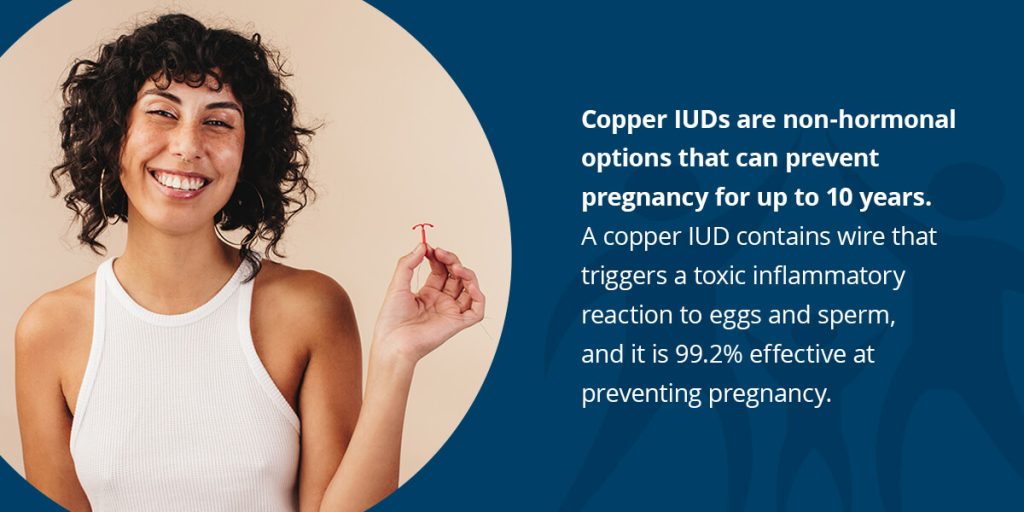
Intrauterine devices are devices placed inside the uterus to kill sperm or prevent its movement. An IUD is a small, plastic, T-shaped device that comfortably fits inside a woman’s uterus.
Copper IUDs are non-hormonal options that can prevent pregnancy for up to 10 years. A copper IUD contains wire that triggers a toxic inflammatory reaction to eggs and sperm, and it is 99.2% effective at preventing pregnancy.
A copper IUD lacks the risks of hormonal birth control such as blood clots, but it can present dangers for women with the following conditions:
- Cervical or uterine cancer
- Pelvic infection
- Uterine abnormalities such as fibroids
- Unexplained vaginal bleeding
- Wilson’s disease — a condition in which vital organs absorb too much copper
In some situations, IUDs can cause infection or uterine perforation. An IUD can also slip out of its position in the uterus, increasing the risk of pregnancy.
Once an IUD is in place, you don’t have to do anything else to prevent pregnancy. Still, you can use a barrier method such as a condom to prevent sexually transmitted diseases if needed.
Hormonal IUDs
Doctors insert hormonal IUDs into the uterus like copper IUDs, but hormonal IUDs release various amounts of hormones instead of copper. They are typically 99.6% to 99.9% effective at preventing pregnancy. Hormonal IUDs vary in duration, size and the hormones they release based on their type.
- Skyla: Skyla can prevent pregnancy for up to three years.
- Kyleena: Kyleena prevents pregnancy for up to five years.
- Liletta: Liletta is effective for up to six years.
- Mirena: Mirena provides pregnancy prevention for up to seven years.
Hormonal IUDs can present the same risks as other hormonal birth control methods and copper IUDs.
Barriers
Barrier birth control methods block sperm from reaching eggs, and some of these can also prevent STDs. Different types of barrier birth control consist of the following options.
- Condoms: External condoms fit over the penis, and internal condoms fit inside the vagina. External condoms are 98% effective at preventing pregnancy and STDs when used correctly. Internal condoms are 95% effective with correct use.
- Spermicide: Spermicides are substances containing chemicals that stop sperm movement. Spermicide alone is approximately 79% effective at preventing pregnancy, so doctors recommend combining it with more reliable methods such as condoms or diaphragms. Spermicide cannot prevent STDs.
- Sponge: A sponge contains spermicide and covers the cervix during intercourse. The sponge must remain inside the vagina for at least six hours following the last sexual activity to be effective. Sponges are 86% effective in women who have never given birth, but the rate drops to 73% if a woman has given birth.
- Diaphragm: Diaphragms are cup-shaped barriers that cover the cervix and block sperm. Diaphragms are 83% effective at preventing pregnancy when you use the correct size and apply spermicide correctly.
You can purchase condoms, sponges and spermicide over the counter, but diaphragms require a prescription. A doctor must fit you to prescribe the correct size.
Natural Birth Control
Natural birth control is also known as family planning or the fertility awareness method. This approach requires women to track their menstrual cycle to know when they are likely fertile. When practicing this method, you should avoid unprotected sex during days you believe you are fertile.
FAM has an approximate 76% pregnancy prevention rate when implemented correctly, but it depends on your ability to track your cycle to accurately determine when you are fertile.
Sterilization
Sterilization is a surgical procedure that permanently prevents pregnancy.
- Vasectomy: A man can undergo a vasectomy to prevent his sperm from reaching the penis. Men typically get this procedure at an outpatient surgical center. Approximately 12 weeks after a vasectomy, a man’s ejaculate should lack sperm. Men must visit their doctor to ensure their sperm count is zero before having unprotected sex. A vasectomy is 99.8% effective at preventing pregnancy.
- Tubal litigation: Tubal litigation closes the fallopian tubes to prevent sperm from reaching eggs during intercourse. Women can talk with their doctors to schedule this surgery at a hospital or outpatient surgical center. This method is 99.5% effective immediately following the procedure.
A vasectomy presents minimal risks, but men may experience discomfort, bruising or swelling following the procedure. Infections and hematomas are also possible. Men should see a health care provider if they experience swelling and bleeding under the skin or scrotal tenderness and redness combined with a fever.
Tubal litigation presents a small risk of pregnancy if a procedure does not fully close the fallopian tubes, and there is a small risk of nearby tissue or organ injury during surgery.
How to Choose Birth Control
The best birth control for you depends on your lifestyle, sexual partners, health condition and desire to have children in the future. Before choosing a method, consider the following factors.
Lifestyle
If you lead a busy lifestyle and find it difficult to maintain daily habits, you should avoid oral contraceptives and opt for a long-term option such as an IUD or hormonal implant. These devices eliminate the risk of forgetting to take a daily pill.
Sexual Partners
If you engage in sexual activity with one exclusive partner, hormonal birth control or an implant are excellent options. However, you should also consider barrier protection, such as condoms, if you have multiple sex partners.
Health Condition
Avoid hormonal birth control if you are older than 35 and smoke tobacco, because this can increase the risk of high blood pressure and blood clots. Also, you shouldn’t get an IUD if you have uterine abnormalities or have had cervical or uterine cancer. A doctor can review your complete medical history to help you determine your best options.
Future Plans
Before choosing a birth control method, think about how many children you may want in the future. For example, you can immediately stop taking birth control pills if you decide to start a family.
Sterilization is an effective option if you don’t want children or already have children and don’t want to add to your family. However, you should only choose this approach if you don’t expect to change your mind.

Contact Hamilton Health Center to Discuss Your Birth Control Options
With birth control, you can take ownership of your wellness and future. Hamilton Health Center can help you make an informed decision based on your needs and medical history. Our caring providers deliver affordable, quality care to individuals in a welcoming environment. Contact Hamilton Health to learn more about our services and how we can help you choose and start a birth control method.
Is It Strep – or Just a Sore Throat?
You wake up to your alarm and the surprise of a scratchy, irritated throat. Could your sore throat be just that — from a cold or using your voice too much — or is it the first sign of strep throat?
Since a sore throat is a common strep throat symptom, many people confuse them and are unsure what care they need. Keep reading to learn about the differences between strep vs. a viral infection.
Sore Throat Symptoms
A sore throat — medically known as pharyngitis — can be caused by several factors, including bacterial infections and allergies to pollen, dust and food. It can also come from overusing your voice, having a dry mouth, sleeping with your mouth open or a burn from swallowing hot food. However, colds and the flu are the most common causes.
Some common symptoms include:
- Pain when swallowing or talking
- Scratchy and swollen throat
- Moderate fever
- Hoarseness in voice
- Swollen glands that cause a lump on the neck
- Runny nose and congestion
- Mild cough
Sore throats are usually treatable at home and heal on their own.
Strep Throat Symptoms
Streptococcal bacteria cause strep throat. This bacteria is highly contagious, so developing strep throat means you likely got it from someone else. The bacteria can spread if someone with the infection sneezes, coughs or shares food or a drink with someone else. You can also pick it up by touching an area where the infection resides — like a doorknob or car steering wheel — and immediately touching your nose, eyes or mouth without washing your hands.
Strep throat is most common in children during the winter and spring. Close contact during these months is an agonist for the infection’s spread.
The symptoms of strep throat are similar to a sore throat but on an elevated scale. Contact your doctor if you or your child experiences any of the following symptoms for more than two days:
- White spots on the tonsils or back of the throat
- A sore throat without coughing or congestion
- High fever of 101 degrees Fahrenheit or above
- Nausea or vomiting
- Red rash starting on the face or neck (known as scarlet fever)
Will Strep Go Away on Its Own?
As a bacterial infection, strep does not go away on its own. Fortunately, treatment is straightforward when you see a medical professional for antibiotics.
What to Do If You Think You or Your Child Has Strep Throat
While getting medical care is necessary for strep, there’s no need to rush to the emergency room unless you suspect another, more severe issue. If you or your child have common strep symptoms, your local urgent care, health center or general practitioner will have the resources to test for strep.
Get Tested for Strep
Doctors recommend going to your local urgent care to get a test done rather than administering a rapid test at home. A provider’s kits are more reliable when testing for antigens belonging to the streptococcus bacterial strain.
Even if you receive a negative result, doctors may perform a throat culture to ensure you do not have strep. Results for these tests are not as quick and may take one to two days to return. In the meantime, try some home remedies listed below to relieve the pain.
If your test is positive, the next step is to pick up the antibiotics your physician prescribes and be sure to take all of them, even if your symptoms fade. Not finishing the prescription may leave some leftover bacteria to flare up, creating another round of strep.
Soothe the Pain
Whether you’re waiting for your test results or beginning antibiotics, you can try a few options to reduce the pain:
- Drink warm liquids: Hot tea with honey and lemon or soup broth are great options to settle the pain in your throat. As a bonus, these comforting drinks are excellent additions to a cozy environment.
- Swish with warm salt water: Stir half a teaspoon of salt in a cup of warm water. Sip it and tip your head back to gargle the salt water. Spit the water out into the sink after about 30 seconds.
- Eat ice cream: Is there anything a scoop of ice cream can’t cure? The cold can help relieve sore throat swelling, like icing a minor sports injury. Sucking on ice chips could also work if ice cream isn’t an option.
- Use over-the-counter (OTC) options: Remedies such as throat lozenges, throat sprays and ibuprofen can temporarily reduce soreness and inflammation. Acetaminophen and ibuprofen can also help you feel better.
- Take it easy: One of the most important tips for a steady recovery is to get lots of rest. Your body will be working overtime to cure the pain, so allow it to rejuvenate by sleeping, reading a book or enjoying another low-energy activity. Be sure to rest your vocal cords since talking or singing can irritate your throat.
How to Prevent Strep Throat in the First Place
Strep throat can be a very uncomfortable experience, even if one of the home remedies is to watch a movie with a bowl of ice cream, which would be an example of strep throat self-care. You can follow some of our top tips to prevent strep if it’s floating around your home or workplace. We recommend washing your hands frequently, using hand sanitizer and avoiding using someone else’s items.
Seek Treatment at Hamilton Health Center
The professionals at Hamilton Health Center are passionate about providing treatment to anyone regardless of economic, health or insurance status. To get tested for strep or schedule an appointment, contact our team or schedule online.
Prenatal Care
Prenatal care is essential to prepare for the birth of your child. There is a lot to keep track of during pregnancy to protect mothers and babies, which can confuse new parents. Prenatal care helps simplify the process by providing you with guidance throughout the entirety of your pregnancy.
Below, you’ll learn more about the importance of prenatal care, what to expect from your visits and prenatal advice to help improve the health of yourself and your baby throughout your pregnancy.
What Is Prenatal Care?
Prenatal care refers to getting routine checkups from nurses, doctors or midwives throughout pregnancy. Prenatal care is important for your baby’s health and your well-being as a mother. Care can start during pre-pregnancy planning, but if this isn’t possible, it’s best to start prenatal care as soon as you know you’re pregnant.
During your prenatal visits, your doctor, nurse or midwife will observe your baby’s development while focusing on improving your health and well-being, which influences your baby’s health. You should speak with your doctor about prenatal care as soon as you become pregnant.
Prenatal Care vs. Perinatal Care
Prenatal care refers to the regular checkups women undergo while pregnant. Perinatal care refers to the health care women receive during and directly after the birth of their child. Many women who receive perinatal care have high-risk pregnancies, or the mother or child has a severe medical condition. Perinatal care can include:
- Screening tests for congenital disabilities and diagnosis
- Care for congenital disabilities, such as congenital heart disease, bladder outlet obstructions and pleural effusion or fluid in the lungs
- Post-birth surgeries due to perinatal conditions in newborns
- Care for heart defects
- Support and guidance for the transition home after the birth
Many reasons exist that a child or mother might need perinatal care during or after birth. Prenatal care can help reduce the risk of complications during childbirth, so it’s always best to consult your doctor as soon as you become pregnant.
Benefits of Prenatal Care
Prenatal care helps improve the health of the mother and fetus, increasing the chance of a successful birth and a healthy child. There are many benefits of prenatal care, including the following:
- Reducing pregnancy complication risks: Prenatal care can help reduce complications by providing prenatal care guidelines to keep you in good health. Some of these guidelines or instructions include participating in moderate exercise, controlling preexisting conditions, eating a good diet and avoiding using or being around harmful substances, such as drugs and alcohol.
- Reducing fetus and infant complications: Using substances during pregnancy can significantly increase the risk of health defects in fetuses and newborns. Substances like tobacco, alcohol and drugs can cause numerous complications, such as physical abnormalities, cardiovascular issues and mental health issues. Prenatal care will help you learn how to stay away from substances while pregnant and monitor the health of your fetus during each trimester.
- Ensuring adequate vitamins and nutrients for the mother and child: Prenatal vitamins are essential for the health of the mother and child. During your prenatal visits, a medical professional will be able to give you recommendations on what vitamins to take during your pregnancy to ensure your and your baby’s health. Folic acid is a popular ingredient in prenatal vitamins because it can help reduce the risk of various defects by more than 70%.
- Ensuring medications are safe during pregnancy: Some medicines aren’t safe to take while pregnant and can increase the risks of adverse health effects for the fetus and child. During your prenatal visit, your doctor will ask what medications you’re taking and determine which are safe to use while providing alternatives for those that aren’t.
Different Types of Prenatal Care
Prenatal care includes more than just a couple of ultrasounds and a few doctor’s visits. You’ll go through different tests and exams to measure your and your baby’s health. Some of the different types of care you can expect during your visits include:
- Testing: Your doctor will perform the necessary testing to check your and your baby’s health. Some of these include tests for blood, infection, anemia, diabetes and other things that could affect the mother or fetus’ health. You’ll also receive screening tests to look for possible conditions your baby may have, such as Down syndrome, cystic fibrosis or gestational diabetes.
- Checkups: Regular checkups are an essential part of prenatal care. These checkups will monitor your baby’s growth and your overall health and well-being. You’ll likely have an ultrasound during your checkups, and you may undergo additional testing to check different things, such as your hormone levels.
- Activity monitoring: Once you reach a particular stage of your pregnancy, your doctor will monitor your baby’s activity, looking for regular movement or irregularities that require your doctor’s care. Counting your baby’s movement at home and reporting the movement to your doctor can help you assess your baby’s activity better. Call your doctor immediately if you don’t feel any activity at all once you’ve reached 28 weeks.
You may undergo additional testing based on age, medical history, test results and ethnic background. Talk with your doctor about the tests you may experience during prenatal visits.
What to Expect at Your Prenatal Care Visit
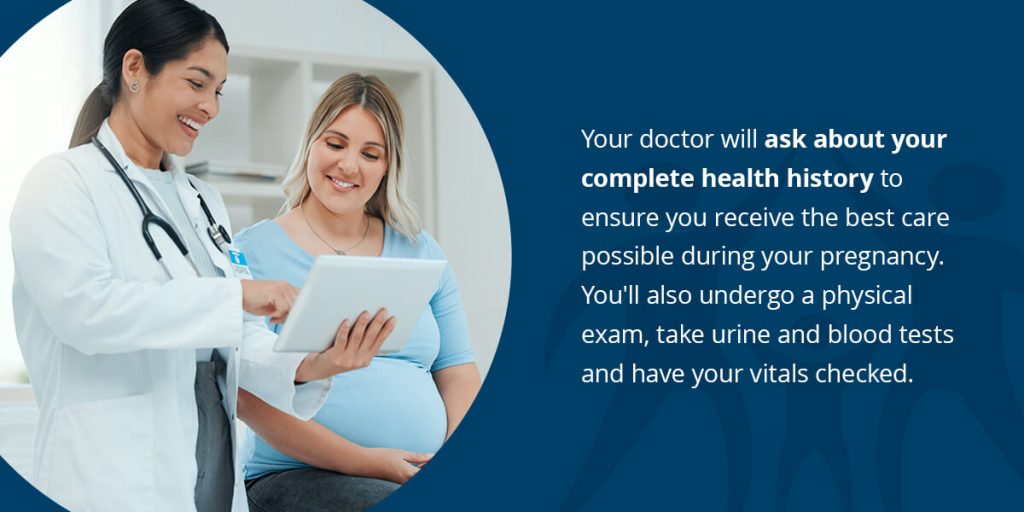
During your first visit, your doctor will ask about any previous pregnancies, operations or diseases. Your doctor will ask about your complete health history to ensure you receive the best care possible during your pregnancy. You’ll also undergo a physical exam, take urine and blood tests and have your vitals checked. You might also receive other tests, such as a cervical exam, mammogram or pap smear.
As your pregnancy develops, you’ll go in for additional visits to check your vitals, your baby’s growth and your baby’s heartbeat and activity. Your doctor will check for potential complications or conditions, such as preeclampsia, anemia or gestational diabetes. The prenatal care timeline for pregnant women looks like this:
- Starting prenatal care between eight and 12 weeks of pregnancy
- Attending prenatal care appointments every four to six weeks during the first and second trimesters
- Checking in with your doctor or midwife every two to three weeks once you reach 28 weeks and until 36 weeks
- Going to your doctor or midwife between 36 and 40 weeks for a pelvic exam and weekly visits
After these appointments, you’ll give birth and switch from prenatal care to neonatal care.
How to Choose the Right OB-GYN
When looking for an OB-GYN and prenatal care options in PA, you want to ensure that they offer the right services to ensure your and your baby’s health throughout your pregnancy. Look for the following prenatal care services from your OB-GYN:
- Pregnancy testing
- Overall health assessments through the duration of your pregnancy
- Delivery assistance
- Postpartum care
- Breastfeeding counseling
- Nutrition education
You should choose an OB-GYN that can monitor your and your baby’s health effectively throughout your pregnancy, testing for abnormalities and providing preventative care. You can ensure you pick the right OB-GYN by looking for an experienced clinic, doctor or midwife in your area.
You can also check reviews once you’ve found a few options, looking for the best reviews from other mothers and expecting families. If you have friends or family who recently gave birth, you can always ask them for referrals if they had a good experience with their OB-GYN.
Want to learn more about the importance of visiting an OB/GYN?

Trust Hamilton Health Center as Your OB-GYN
Pregnancy is an exciting time for many women and their families. However, it can also be stressful without the proper guidance. At Hamilton Health Center, we offer prenatal care services to ensure that you and your baby are taken care of during pregnancy. Our team aims to provide you with high-quality care and comprehensive services in one place, reducing the need to visit multiple offices or clinics during your pregnancy.
We provide regular testing and exams through each trimester of your pregnancy and educational resources to help you prepare. We can help you make decisions about your care in confidence. Learn how we can make a difference in your pregnancy care, and contact us today to get started!
More Resources for Women
Co-Sleeping and Bed-Sharing Safety Guidelines
Bringing your new baby home from the hospital is one of the most incredible feelings any new parent will ever experience. You hold this tiny body in your arms and realize that their safety, well-being and survival depend on you. As a mother, you have never left your child alone as you carried them for the last nine months, so how will you put your baby to sleep in a crib? They have never been away from you.
Co-sleeping — or sleeping in proximity to your baby, often in the same room — and bed-sharing are decisions that more and more families are opting for with new babies and even toddlers. This can be mutually beneficial for both mother and baby but needs to be done according to safety guidelines.

What Are the Advantages of Co-Sleeping and Bed-Sharing?
Being a new parent or even a parent for a second or third time, it is quite easy to forget just how little sleep you get with a new baby at home. Co-sleeping and bed-sharing can help parents get more restful sleep at night. Babies sleeping with the smell and touch of their parents tend to get more sleep, too! Here are a few more advantages of co-sleeping:
- Breastfeeding is easier during the night when the baby is nearby.
- Sudden infant death syndrome (SIDS) risks are reduced by up to 50% by sleeping in the same room.
- There is no nighttime separation.
- There are fewer bedtime hassles.
- You can keep your baby close all night and wake up to your smiling baby.

Safety Guide to Co-Sleeping and Bed-Sharing
When considering co-sleeping or bed-sharing, it is important to follow a few safety guidelines to prevent unintentional injury to your baby and other incidents. Co-sleeping or room-sharing is considered safer than bed-sharing, so keep that in mind as you make your decision. There are still co-sleeping safety tips you can follow to ensure you can sleep with peace of mind.
Consider Your Sleep Space
Considering your bed size and mattress is important as you want to ensure that there is enough room for everyone to sleep comfortably. Consider your partner and how you usually sleep, as this will help determine a space big enough for all of you.
If you’ll be sharing a room instead of a bed, which the American Academy of Pediatrics (AAP) recommends, evaluate your room’s layout. Where will there be space for the crib or bassinet? Will you need to move furniture to ensure a clear path between your bed and your baby’s?
Clear Your Bed
Make sure you remove unnecessary blankets and pillows from your bed that could become a danger while you and your baby are asleep. Remove scatter cushions or any other decorative linens that could cause a safety issue. Ensure your sheets are tight-fitting and your baby cannot become tangled in them. Keep the covers off your baby’s head and ensure your bed is not too soft, such as a waterbed.
Make a Safe Space for Your Baby
Make sure your bed is safe for your baby to sleep on if you choose bed-sharing. Clear any unnecessary blankets, pillows and stuffed animals. Using bedrails can also be beneficial to ensure your baby does not roll off of the bed as they get bigger. If your bed is against a wall or piece of furniture, make sure there is no space between the bed and wall before bedtime.
Again, sharing a space rather than a bed is recommended, and you should check that your child’s crib meets safety requirements. Use a firm mattress that fits well in the crib. Avoid adding any blankets, pillows or stuffed animals into your baby’s crib.
Keep Your Baby Lightly Dressed
Keep your baby lightly dressed and avoid swaddling the baby. Avoid big jackets, fluffy blankets and anything else that could be pulled over your baby’s head in their sleep. Keep them lightly dressed and focus on warming the room as opposed to dressing your baby too warm in a cold room.
Avoid Alcohol or Drugs
It is very important that you are not under the influence of drugs or alcohol when you get into bed with your baby, as a lighter sleep is preferred when bed-sharing to avoid the risk of suffocation. If you have taken sedative medication or are suffering from sleep deprivation, it is also advised against bed-sharing during this time as it will be difficult for you to wake.
Sleep Facing Your Baby
Facing your baby can let you monitor them continuously throughout the night. This will also make breastfeeding throughout the night much easier for mom and baby. Even if your baby is sleeping in a separate crib, facing them throughout the night can give you peace of mind.
Childproof Your Bedroom
While guidelines suggest room-sharing up to age 1, you may choose to share a room longer with your toddler. As your child gets older and is able to get off of the bed and move around, make sure your bedroom is childproofed. Anchor furniture to the walls, and avoid having anything in your bedroom that toddlers can climb on or pull on. You should also protect outlets and keep cables and wires out of sight.
Keep Your Pets off of the Bed
Many children suffer from allergies, and having your fur babies on the bed could become a health risk to the baby. Keeping your pets off of your bed is important as you want to create a clean and dust-free environment for your baby to sleep in.
If your pets won’t sleep in their own beds and continue to sleep in your bed, it is better to find an alternative place for your baby to sleep and consider room-sharing.
Avoid Strong Scents
Strong scents in lotions, fabric softeners and air fresheners can affect your baby’s sensitive senses. This is best to avoid around the house while your baby is small and especially in bed.
Avoid Your Older Children Sleeping Next to a Baby
Anyone that has slept with a toddler or elder child can easily agree that they sleep as if they need to take up the whole bed. Keeping older children out of the bed is beneficial for a number of safety reasons. When an older child is asleep, they are less likely to worry about their younger sibling. Consider room-sharing with your older child in their own toddler bed for when the new baby arrives. You might also move your toddler to their own room if you feel they’re ready.
Put Your Baby in the Best Position
All major medical groups recommend that a baby sleeps on their back, as most cases of SIDS occur when baby is sleeping on their stomach.
Seek New Parent Services at Hamilton Health Center
Co-sleeping and bed-sharing can be an incredible experience for the whole family and includes a whole range of advantages. Practicing safe co-sleeping or bed-sharing practices can make this journey a truly wonderful one. At Hamilton Health Center, we’re dedicated to helping new parents achieve healthy outcomes.
Our Baby Love Services combine substance use treatment with other support and family preservation services to help new parents and prenatal individuals. For more information on our Baby Love Services, contact Hamilton Health Center today.
How STDs Spread – Debunking STD Spreading Myths

Sexually active individuals should practice safe sex to reduce the risk of spreading sexually transmitted diseases. STDs can be transmitted through various sexual acts, including vaginal, anal and oral sex. Fortunately, STDs are easily prevented by practicing safe sex and using contraceptives and other forms of protection. Additionally, routine STD testing can ensure the health of sexually active individuals.
How Do STDs Spread?
The term STDs refers to sexually transmitted diseases, meaning, in most cases, they spread through sexual intercourse. STDs are one of the most common contagious diseases, with more than 1 million sexually transmitted infections occurring each day worldwide. STDs and STIs spread through oral, vaginal or anal sex.
While some people may think you have to have intercourse to contract an STD, some STDs can spread from skin-to-skin contact, including herpes and human papillomavirus (HPV). While STDs can affect anyone sexually active, they disproportionately occur in younger populations. People between the ages 15 to 24 account for half of all new STD cases, despite this group representing only 25% of the sexually experienced population.
An STD or STI is a serious illness that requires medical attention and treatment. Fortunately, many STDs can be treated and cured. On the other hand, certain STDs, such as herpes or human immunodeficiency virus (HIV), are treatable but not curable. Learning how to protect yourself from STDs is of the utmost importance to remain healthy and safe.
While most STDs occur due to oral, vaginal or anal sex, one sexually transmitted infection can occur through other means. Trichomoniasis, an STI transferred through parasites, can pass through wet clothing or moist towels previously used by a person infected with trichomoniasis. This occurrence is rare, but it can happen. Although it can spread through non-sexual means, trichomoniasis is still most commonly spread through direct sexual contact.
Condoms and other forms of contraceptives can help protect you during intercourse. Those with more than one sexual partner or who have sex with someone who has multiple partners are often at a higher risk of contract an STD or STI. Other high-risk behavior includes not using contraceptives, sharing needles with intravenous drug users or having intercourse with people that you do not know their sexual history.
Common STD Myths
Being informed and educated about various STDs and how they spread can help you learn how to stay safe and protected during sex. Unfortunately, there is a lot of misinformation and myths circulated about sex and STDs, potentially increasing the risk of STD transmission if people are unsure how to protect themselves while having sex.
Can You Get STDs From Kissing?
Kissing is generally a low-risk activity, especially when compared to oral, vaginal or anal sex. However, it is possible to transmit herpes, syphilis and cytomegalovirus (CMV) through kissing. While CMV is present in the saliva, syphilis and herpes are transmitted from direct skin-to-skin contact, especially when sores are present on the lips or surrounding the mouth. Overall, kissing is a safer, low-risk activity, especially if no visible sores are present.
Can You Get STDs If Both Partners Are STD Free?
If two partners do not have any STDs or STIs, they cannot transmit an STD to one another. Two STD-free people can’t transfer an STD to one another, as one partner must have an STD or STI to transmit it. However, many partners may think they both are STD-free, leading some couples to have unprotected sex, resulting in an STD.
Even if a partner got tested within the last few weeks or months, they still might have an STD, especially if they have had another partner since being tested. Certain STDs do not show up right away on an STD test. For example, chlamydia, gonorrhea or syphilis may show up on a test within days or weeks. On the other hand, HIV may take approximately three months to show on an HIV test.
Can You Have an STD And Not Pass It On?
If your partner has an STD, there is always a possibility it may be transmitted to you, especially if you have unprotected sex. However, there is no STD that will be transmitted every time a person has sex. While STDs are not transmitted every time you have sex, there is always a possibility they can be transmitted any time you have sex. Numerous factors affect the likelihood an STD may be spread, including length of intercourse, STD type, type of lubricant used and more.
Will I Be Judged for Getting an STD Test?
Medical professionals receive training that teaches them not to judge patients who have STDs. Unfortunately, not all doctors follow this advice. However, many providers who openly advertise their STD testing services do not judge patients for getting tested. If you worry about judgment, try to find a provider that clearly says they don’t judge you when they describe their services.
No matter what, treating your STD is much more important than not getting judged. Remember that having an STD is not a moral failing — it is just a medical condition like having a broken arm.
Can You Wear Two Condoms for Protection?
A condom is an effective form of contraceptive that is 98% effective at protecting against numerous STIs and STDs. Because of this, some people may think wearing two condoms will provide an extra layer of protection. Unfortunately, wearing more than one condom can have the opposite effect and decrease effectiveness.
When you wear two condoms, the amount of friction can cause the condoms to break and begin leaking. Wearing one condom is safer and much more effective than layering up on these contraceptives. It is essential to use a condom correctly and consistently to prevent the transmission of various STDs and STIs.
Can You Get STDs From Oral Sex?
Yes, many STDs can spread through oral sex, including syphilis, chlamydia and gonorrhea. Some people may believe abstaining from vaginal and anal sex and only performing oral sex will protect them from STDs, but it is important to put the proper precautions in place. To protect yourself during oral sex, you should use a dental dam, condom or another barrier contraceptive to reduce the risk.
Why Is STD Testing Important?
The CDC estimates that about 19 million new cases of STDs happen every year. Since many STDs don’t have obvious symptoms, getting tested is the best way to find out if you have one. Knowing if you have an STD lets you treat your disease and protect yourself and your sexual partners. While STDs seem scary, you can get a diagnosis and treatment for many of them easily. You just need to take the first step.
How Often Should You Get Tested for STDs?
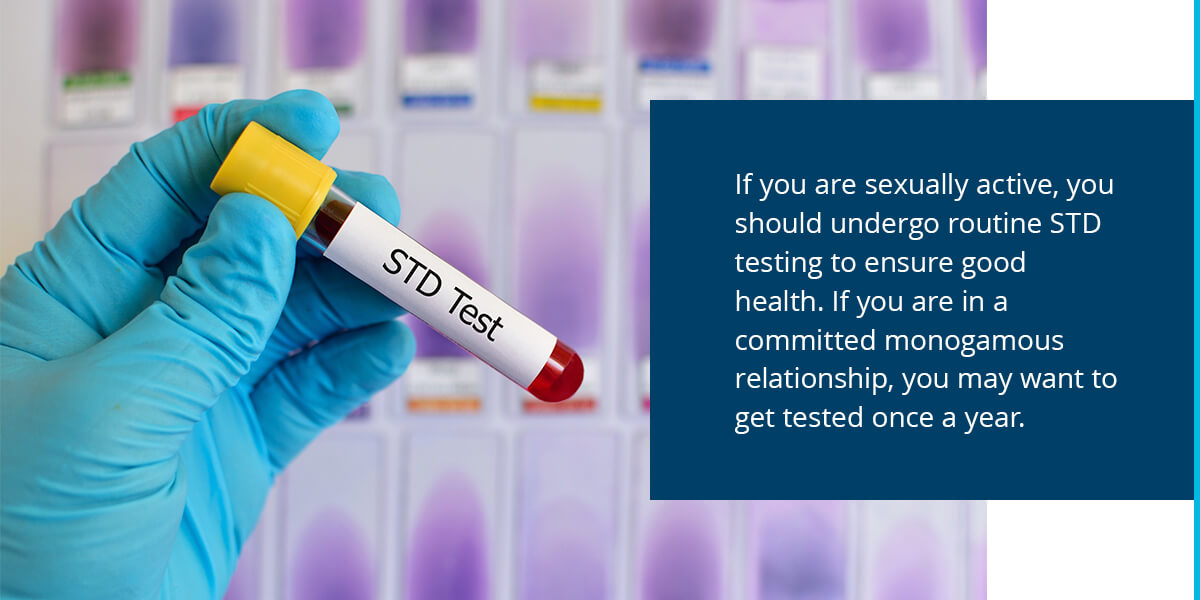
If you are sexually active, you should undergo routine STD testing to ensure good health. If you are in a committed monogamous relationship, you may want to get tested once a year. On the other hand, if you have multiple sexual partners within a year, you should get tested more frequently, at least every three to six months. In general, you should get tested every time you have a new sexual partner.
If you have sex with multiple partners or display any symptoms of an STD or STI, you may want to get tested. To test for STDs, your doctor may need to take a urine sample, blood or other fluids. Because some STDs may not show on a test immediately, it is vital to get tested regularly. If you have any abnormal symptoms, it is best to check with your doctor and get tested to be safe.
STD Treatment
The treatment you may need depends on the type of STD or STI you may have. Depending on the STD, treatment may be able to improve symptoms and prevent flareups from occurring. Additionally, some STDs and STIs can be cured with proper treatment. It is important to note, even if you are receiving treatment for an STD, you may still transmit the STD.
While treatments vary depending on the STD, some of the most common treatments include antiviral medications, antibiotics, topical lotions and creams. Antiviral medications can help treat infections, such as HIV or herpes, and prevent flareups. Some antiviral medications can even suppress HIV for a lifetime. Antibiotics are also a common STD treatment often used to treat gonorrhea, trichomoniasis, chlamydia and syphilis.
When on antibiotics, it is best to avoid sexual intercourse until the entire treatment is complete and has effectively treated the STD. In some cases, a doctor may prescribe a cream or lotion to improve sores or lesions. If you believe you may have an STD or STI, you should contact your doctor immediately to get tested and talk about potential treatments.
How Do I Talk to My Partner About STD Testing?
If you have a sexual partner, getting tested together will help you prevent spreading an infection back and forth. However, you might feel nervous about talking to them about it. Let them know you’re asking because you want to stay healthy, not because you think they’re “dirty.” Don’t let your partner pressure you to have sex with them if they don’t want to talk about sexual health with you.

STD Testing in Pennsylvania
The Hamilton Health Center is committed to providing high-quality care to all patients to lead a healthy lifestyle. Our team offers the highest level of health care in a family-friendly, multilingual environment. We are proud to offer many services, including adult medicine, pediatrics, women’s health, teen health and more. Our goal is to help all patients receive regular primary care and achieve better health outcomes. To learn more about our health center, contact us online or call (717) 232-9971.
Other STD Resources
Dental Tips for Keeping Your Child’s Teeth Healthy
Dental hygiene is important from a much earlier age than most people expect. Just because children lose their first set of teeth as part of their natural development doesn’t mean you don’t need to take care of them. Decaying baby teeth can cause long-lasting dental problems that can follow your child into adulthood.
Caring for your baby’s teeth and gums from the very beginning can significantly reduce their risks for serious dental issues later in life. Teaching your kids to care for their teeth at an early age can help build healthy habits that they’ll be thankful for when they’re older.
Dental Tips for Infants and Toddlers
Caring for your baby’s teeth and gums begins well before your child starts teething. Even before your child’s first teeth come in, you should clean their gums after each meal. Healthy gums are less sensitive and can help protect your baby’s first teeth from disease and decay.
There are multiple methods for cleaning your child’s gums. You can wipe them with a clean washcloth soaked in warm water or brush them with a damp piece of gauze wrapped around your finger. You can also purchase a special infant thimble designed for brushing gums. You can use these methods for cleaning your baby’s first teeth as well, or if you prefer, you can also use a soft-bristled toothbrush.
Learn more about the correct hygiene sequence.
Be Careful With Pacifiers and Thumb Sucking
Pacifiers and thumb sucking are common habits for infants and toddlers. Thumb sucking is a perfectly natural part of child development. However, prolonged use of pacifiers or thumb sucking can cause long-term problems such as crooked teeth. Of the two, pacifiers are preferable to thumb-sucking as it is an easier habit to break. For healthy toddler teeth, we recommend weaning your child off of their pacifier by age three.
Misuse of pacifiers can also contribute to tooth decay. To help care for your toddler’s teeth, avoid coating pacifiers with sugar or honey. In addition to directly contributing to tooth decay, coating pacifiers with sugar can make it harder to wean your toddler off the pacifier.
Be Careful With Bottles and Nighttime Feeding
It’s common for parents to let their child sleep with a bottle of milk, formula or juice. This practice, however, can cause serious harm to your child’s teeth, known as baby bottle tooth decay. To prevent this from happening, do not allow your child to sleep with a bottle or fill the bottle with water instead. Otherwise, the sugar in other drinks can adhere to your baby’s teeth while they sleep, causing accelerated tooth decay.
You’ll also want to move from bottles to sippy cups once your child is old enough. A good age for this is sometime between when your child can first sit up on their own and their first birthday. Drinking beverages like juice from a bottle is more damaging to a toddler’s teeth because the sugar is in contact with their teeth longer than it would be if they drank from a cup instead.
Tips to Prevent Cavities in Children
Cavities are an unfortunately common occurrence in children. Over 50% of children between ages six and eight have at least one cavity in their baby teeth, and 57% of adolescents have had a cavity in their permanent teeth. Fortunately, there are steps you can take to mitigate the risk of your child developing cavities.
Limit Sugary Foods and Drinks
Sugary foods and drinks are some of the most significant contributing factors to tooth decay. Sugary foods encourage bacteria growth and plaque buildup. In addition to the large amounts of sugar that provide food for bacteria, sugary snacks often contain acids that erode the surfaces of teeth. They also tend to be sticky and difficult to fully clean off your child’s teeth.
In addition to reducing the overall amount of sugary food and drinks your child consumes, limit the time and frequency of exposure. For example, only provide drinks like milk and juice at mealtimes and have water available for your child at all other times. Consider limiting snacks to set times and providing healthy low-sugar snacks like celery and baby carrots.

Start Brushing Early
One of the most important ways to care for baby and toddler teeth is regular cleaning of the teeth and gums. You should begin brushing your child’s teeth as soon as they have their first tooth. Brush your baby’s teeth twice a day.
As your child grows older, teach them to brush their own teeth. One of the best ways to teach them is to model for them. Be sure to supervise your child while brushing their teeth until they are around seven years old and consistently demonstrate proper teeth brushing behavior. Make sure your children are brushing their teeth for two minutes.
Also, watch to make sure your child is spitting out the toothpaste instead of swallowing it. Children should not rinse with water afterward for two reasons. Rinsing increases the likelihood that they will swallow the toothpaste. Water also washes away the fluoride in the toothpaste. Fluoride is important because it promotes healthy teeth for kids by strengthening tooth enamel.
Floss Daily
In addition to brushing their teeth, children should start flossing daily once they have teeth that are next to each other. This could happen as early as two years old and typically not later than six years of age. Flossing is vital because it prevents plaque and bacteria from building up between crevices in the teeth that brushing can’t reach.
Just like with tooth brushing, it’s important you show your child how to take of their teeth by flossing and supervisee them while they’re still learning. Enforcing daily flossing from an early age can help your kids build good habits for lifelong oral health.
See Your Child’s Dentist Early and Often
Early examination and preventative care can help keep your kid’s teeth healthy. Your child should visit the dentist for the first time within six months after getting their first tooth, or by their first birthday, whichever comes first. They should continue seeing their dentist every six months after the initial visit. Routine dentist visits promote good oral health.
In addition to providing professional teeth cleaning and preventative dental care, your family dentist will provide detailed information about caring for your child’s teeth and gums. Lastly, regular dental checkups increase the likelihood of diagnosing any dental health problems early before they develop into a more severe condition.
If you’re looking for family dental services in the Harrisburg Area, get in touch with Hamilton Healthcare Center. We provide comprehensive, affordable family dental services. Call us at 717-232-9971 to schedule your first appointment.

Charlie Batch — One of Pennsylvania’s First WIC Babies
NFL fans might be familiar with Charlie Batch’s achievement on the field. As a Pittsburgh Steelers quarterback, he accomplished a great deal throughout his 15-season NFL career, including winning two Super Bowls. Even after he retired, Charlie Batch has continued to be involved in the sport, serving as a game-day commentator for the Steelers and transition consultant for the National Football League Players Association (NFLPA).
But Charlie Batch is also frequently recognized as one of Pennsylvania’s first Special Supplemental Nutrition Program for Women, Infants, and Children (WIC) babies. When he was growing up, this program helped provide nutrition for his family. Receiving foods ranging from milk to fruits and veggies helped Charlie grow as both a child and athlete.
Today, he continues to share the positive impact this program had on his family — and many other families throughout Pennsylvania — to show his support and raise awareness.
What Is a WIC Baby?
The Special Supplemental Nutrition Program for Women, Infants, and Children, also referred to as WIC, was established in the early 1970s. The purpose of this program is to serve low-income women, infants and toddlers, and children up to age 5.
Women and children at nutritional risk can receive supplemental nutritional foods as well as nutritional counseling at WIC clinics. Along with food benefits, this program also includes screenings and referrals to social, health and welfare services.
Through WIC, pregnant, breastfeeding and non-breastfeeding postpartum women can more easily support and provide their babies with the nutrition they need to grow strong and healthy.
Learn More About WIC
At Hamilton Health Center, we offer WIC services to the greater Harrisburg area at our facility. If you qualify, every participant in your family can receive food benefits. You can also take advantage of:
- Breastfeeding promotion and support.
- Healthy foods.
- Health and social service referrals.
- Nutrition education and tips.
We are here to provide health care and support when no one else will. To learn more or see if you qualify for WIC services, please contact us today.
Train To Become a Medical Assistant with NIMAA
Our New Partnership With NIMAA
Hamilton Health Center is proud to announce its new partnership with the National Institute for Medical Assistant Advancement (#NIMAA). We look forward to training the next generation of Medical Assistants this March! To learn more about the NIMAA program, visit: www.nimaa.edu. or contact Melisa Burnett at mburnett@hamiltonhealthcenter.com
Training To Become a Medical Assistant
Have you or anyone you know thought about training to become a Medical Assistant? Do you like to help others? Is serving your community important to you?
Train to become a Medical Assistant with the National Institute for Medical Assistant Advancement and gain hands-on and diverse in-clinic experience at Hamilton Health Center. Hamilton Health Center will be starting MA training with the National Institute for Medical Assistant Advancement March 2021 for under $7000.
How to Apply 
Applications for March classes close January 31, 2021. Apply today at www.nimaa.edu. Please contact Melisa Burnett, Program Manager a Hamilton Health Center at mburnett@hamiltonhealthcenter.com for more information.
How to Lower Infant Mortality Rates in the African-American Community
One way to gauge the health and well-being of a society is to take a look at its infant mortality rate. Infant mortality refers to the death of a baby before their first birthday. The overall infant mortality rate across the U.S. is 5.7 out of every 1,000 live births. The rate varies from state to state and across race and ethnicities. In 2018, the state with the highest infant mortality rate was Mississippi, at 8.3 out of 1,000 live births. The state with the lowest rate was New Hampshire, at 3.6 out of 1,000 live births. Pennsylvania hovered close to the national average, with a rate of 5.9.
There’s also a racial divide when it comes to infant mortality. African American infant mortality rates are higher than for other races and ethnicities. The infant mortality rate for non-Hispanic black babies is 10.8, compared to 4.6 for white babies. Several factors, including access to health care, economic status and how prepared a person is to be a parent, can contribute to infant mortality rates.
Why Are African American Babies More Likely to Die Before Their 1st Birthday?
There isn’t one single reason why babies born to African American mothers are statistically more likely to die before the age of one. Instead, multiple factors contribute to higher rates of black infant mortality. Those risk factors include:
- Racial and gender discrimination: Implicit bias against non-white patients and bias against female patients can negatively affect the quality of care African American patients receive. Their needs and concerns might not be taken as seriously as those of a white, male patient, meaning that legitimate infant health concerns might not be treated in a timely manner.
- Reduced access to prenatal care: The ability to access pre-pregnancy and prenatal care is critical to the health of the mother and baby during pregnancy and after birth. When a pregnant woman isn’t able to see a doctor, she is less likely to get the care she needs or to have potential concerns and complications addressed. Prenatal care can help a woman learn about the supplements she can take to improve the health of her baby and the habits or lifestyle choices she might have to adjust to ensure a pregnancy that’s as healthy as possible.
- Poor mental and physical health: The health of a woman before she becomes pregnant can have an impact on the health of her baby. Black women are not statistically more likely to experience mental health concerns than white women, but they are more likely to try and sort through the issue on their own, rather than get professional medical help. Mental health, specifically stress, can have an adverse affect on your baby’s health status while the mother is pregnant.
- Socioeconomic status: There are notable income differences between white households and black households, which can affect the quality of medical care and access to care a family receives. Socioeconomic status affects many areas of our life including birth weight, death rates, heart disease, and other infant health outcomes.
- Exposure to stress over the course of a life: The amount of stress a mother experiences can have an impact on the mortality and health of her infant. Factors such as growing up poor, being the primary breadwinner for a family and having chronic health conditions such as diabetes can all contribute to infant mortality rates and infant mortality statistics.
Most Common Reasons for Child Death
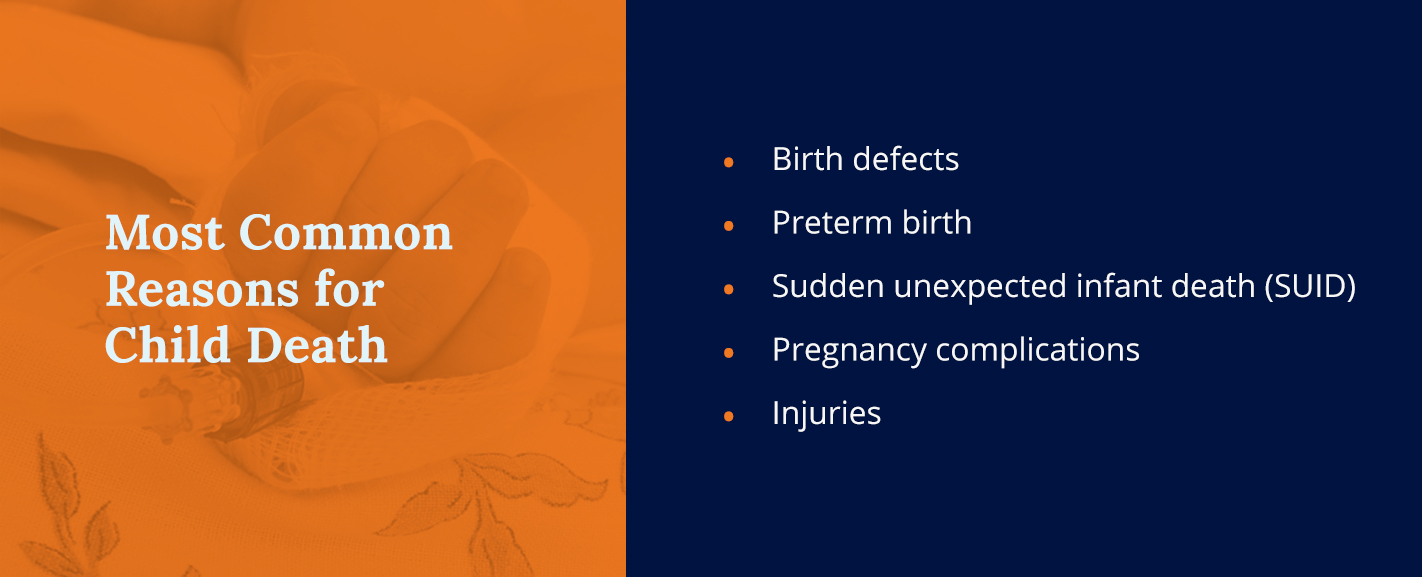
Parents who lose a baby before their first birthday often have questions about why their child died and whether there was anything they could have done to prevent it. In many cases, the parents of the baby feel high levels of guilt. Understanding the more common causes of infant mortality can help parents avoid self-blame and can reduce feelings of guilt:
- Birth defects: About 3% of babies are born with a birth defect, which can range from mild to severe. Some birth defects can affect a child’s overall quality of life, while others can lead to infant death. Although it is possible to reduce the factors that can contribute to birth defects, such as by avoiding drinking alcohol or smoking during pregnancy, there isn’t a way to fully safeguard against infant health disparities.
- Preterm birth: A baby is preterm if they are born before 37 weeks. Preterm babies can have an increased risk of complications, including vision, breathing and feeding problems. Prenatal care can help to reduce the chance of a baby being born too early and reduce mortality rate.
- Sudden unexpected infant death (SUID): Around 3,600 infants die unexpectedly in the U.S. each year. Sudden infant death syndrome (SIDS) and unknown causes and strangulation in bed are examples of SUID.
- Pregnancy complications: Complications during pregnancy, such as gestational diabetes and high blood pressure, can put the health of mother and baby at risk.
- Injuries: Some injuries can be severe enough to be fatal to a baby. Injuries that can occur include suffocation, burns and drowning. Fortunately, there are many ways that parents can protect their babies and reduce the risk of a fatal injury.
Tips to Prevent Infant Mortality
If you are expecting a baby, you can take action to protect their health, both during your pregnancy and after birth. Here’s what you can do to keep your little one safe:
- Follow the ABC’s: When you put your baby to bed, remember your ABC’s: alone, back, crib. Your baby needs their own place to sleep to reduce the risk of being rolled on during the night and to keep them from getting stuck. Putting your baby on their back (not stomach) to sleep reduces the risk of SIDS. They should sleep in a crib that’s empty except for a mattress.
- Use a car seat: When traveling with your baby, strap them into a car seat that is appropriately sized for their weight and age. Babies under the age of two should ride in a rear-facing seat.
- Breastfeed: Breastfeeding your baby helps to build up their immune system and gives them the nutrition they need. Babies who breastfeed have a reduced risk of diabetes, certain infections, cancers and obesity.
- Get prenatal and postnatal care: Getting the right medical care during your pregnancy is essential for a healthy delivery. With prenatal care, you and your doctors can monitor your health and well-being during the pregnancy and can quickly treat and manage any issues or complications that arise. Prenatal care can help to lower the risk of birth defects and preterm birth as well. Postnatal care is vital for your baby’s health as well as for your own mental and physical health.
- Take folic acid: Even if you aren’t currently pregnant or planning on becoming pregnant, the Centers for Disease Control and Prevention recommends taking 400 micrograms of folic acid daily to reduce the risk of birth defects.
Give Your Baby a Healthy Start With Hamilton Health
You and your baby deserve a healthy start and access to family planning and health assistance when needed. Hamilton Health’s Greater Harrisburg Healthy Start program provides free care and case management to pregnant women and families of children under the age of 18 in Dauphin County. To give your baby the healthy start they deserve, contact us today to learn more about our services.